Water Clarity
water clarity
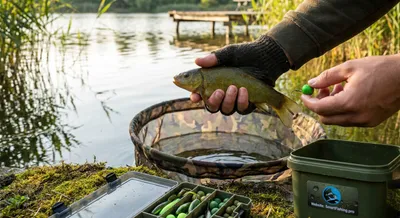
Color and Visual Cues: Do Green Tench Prefer Green Baits?
In general, many freshwater fish see best in the green-blue portion of the spectrum and may be very sensitive to UV light, but they often have weaker...
Water Clarity
Water clarity refers to how clear or murky water looks, which depends on how much light can pass through it without being scattered or absorbed. Clear water allows you to see farther down, while cloudy or colored water limits visibility and changes how colors appear. Particles like silt, algae, and organic matter, plus dissolved substances, are the main things that reduce clarity. Weather, runoff from land, and human activities such as construction or agriculture often increase those particles in a lake or stream. Measuring clarity can be as simple as using a Secchi disk to see how deep it disappears, or as technical as measuring turbidity with instruments. Clarity matters because it controls light penetration, which affects temperature, plant growth, and oxygen levels in the water. Low clarity can make it harder for plants to photosynthesize and for visual predators to find prey, shifting the whole food web. For anglers, clarity influences bait visibility and fish behavior, so different tactics are needed in clear versus murky water. Poor clarity can also harm recreational uses, reduce property values, and signal pollution that may need management. Improving clarity often involves controlling erosion, reducing nutrient runoff, and restoring wetlands that trap sediments before they reach open water.
Get New Fishing Research & Podcast Episodes
Subscribe to receive new research updates and podcast episodes about freshwater fishing, lake fishing, fish species, seasonal patterns, fishing tactics, bait, lures, rigs, and practical angling strategy.