Groundbait and Particle Strategies to Draw Tench Without Inviting Bream
Targeting Tench with Fine, Low-Oil Baits
Tench and bream have different feeding habits. Tench are bottom-feeders that often snuffle through silt and weeds for worms, bloodworms, and casters (maggots), while bream tend to feed in open water on larger, high-energy food like pellets and sweetcorn (dynamitebaits.com) (www.farnhamanglingsociety.com). To draw tench without encouraging bream, anglers use fine, low-oil groundbait mixes spiked with small live baits.
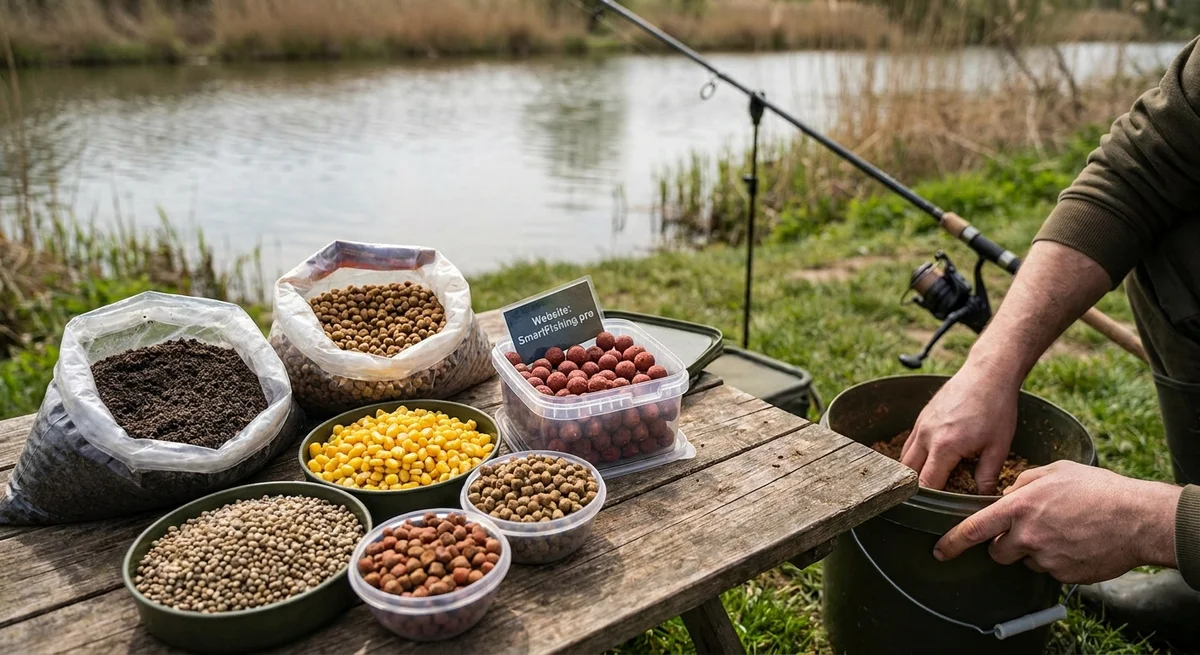
For example, coarse-fishing experts recommend fine groundbait with minimal whole particles, since too many freebies can distract tench (www.farnhamanglingsociety.com). One angling guide notes that tench are “naturally attracted to worms, red maggots and casters,” and advises using a fine crumb base with only a few loose items (www.farnhamanglingsociety.com). Similarly, fishing specialists like Paul Garner stress feeding the tench’s favoured foods first. He writes that at difficult venues baits resembling tench’s natural diet – chopped worms, maggots, casters – “reign supreme” (dynamitebaits.com). Garner even provides a “Hempy Groundbait Mix” recipe: he mixes a green fish-free groundbait with krill powder, then folds in just a handful of casters and hemp seed, warning “don’t add too many” freebies at first (dynamitebaits.com). His approach is to form only a few small bait balls (e.g. five tangerine-sized balls), which break up quickly and release scent, rather than filling the swim with heavy feed.
In contrast, heavy, corn-and-crumb blends tend to summon bream and other schooling fish. For example, one bream specialist’s chosen mix is primarily pellets and sweetcorn, bulked out with boiled pellet or bread crumb (ccmoore.com). He notes “bream absolutely love” pellets mixed with sweetcorn and boilie crumb (ccmoore.com). Angling Times explains that fishmeal-based groundbaits (rich in powdered fish offal) hold together on the bottom and continuously scent the area – ideal for bottom feeders like bream (www.anglingtimes.co.uk). By contrast, active mixes (with ingredients like hemp) produce a cloud of particles that attract roach and other small fish; according to Angling Times, “bream, skimmer bream, tench and carp aren’t particularly fond” of the rising-cloud effect from hemp (www.anglingtimes.co.uk). In practice, this means heavy corn and breadcrumb mixes often excite large shoals of bream, whereas a cloudier, herbal low-oil mix is less attractive to them.
Designing a Controlled Trial
To test these strategies, a controlled side-by-side trial can be set up. Two identical swims (or session rotations) would use:
- Fine Mix Treatment: A low-oil groundbait mixed with chopped worm/chopped worm or casters, hemp, and minimal cereal particle (e.g. green fish-free base like Garner’s recipe).
- Crumb-Corn Treatment: A heavy mix of bread crumb, corn and pellets, with binder (e.g. molasses or nuts) to make dense, slow-dissolving balls.
For each treatment, keep everything else constant (location, hookbait, gear). Measure outcomes like target vs bycatch catches, bite timing, and rig tangle incidents. Record the number of tench versus unintended species (bream, roach, etc.) caught under each mix. Log when bites occur after baiting (e.g. midday, evening) to compare activity patterns. Also note any equipment issues: for example, heavy crumbs or thick mix might foul rigs more often.
This mirrors methods in fisheries research. For instance, angling scientists have measured how bait type affects bycatch and catch timing (www.sciencedirect.com). In a cod-fishing study, natural baits greatly increased bycatch of non-target species (www.sciencedirect.com). We would similarly analyze catch compositions: e.g. calculate bycatch rate = (non-tench catches) / (total catches) for each bait. We could also measure time-to-bite by noting how long after bait introduction the first tench or bream strikes. And rig tangles can be counted by logging each time lines or rigs foul (perhaps more common with sloppy groundbait that holds hooks).
The scientific literature confirms bait formulations alter fish feeding. In lab trials, common carp fed high-protein (animal) groundbaits grew significantly more than those on cereal mixes (pmc.ncbi.nlm.nih.gov), implying fish feed more on protein-rich baits. Field-based food studies show introduced groundbait dominates fish diets: stable-isotope analysis found angler-bait can make up 30–50% of a fish’s diet (pmc.ncbi.nlm.nih.gov). Thus, the mix you choose strongly shapes which fish bite.
Bait Recipes and Schedules
Prebaiting Schedule: A little-and-often approach draws fish in without overfeeding one species. For example, the Farnham Angling Society recommends feeding small amounts every other day in the weeks before fishing (www.farnhamanglingsociety.com). Start with perhaps a pint of bait per drop (e.g. half a cup of loose crumb, a handful of corn and a pint of chopped worms) every 2-3 days. As fish begin to show (e.g. sightings or tiny pickups), gradually increase to daily sessions and larger amounts. A cheap effective prebait mix is simply brown bread crumb, sweetcorn and chopped worm (www.farnhamanglingsociety.com). One recipe is: mix 2 parts crumb, 1 part thawed sweetcorn, and 1 part chopped redworm. Mold this into loosely packed balls and drop a few into the swim repeatedly. Farnham notes adding a little hemp is especially good in spring (www.farnhamanglingsociety.com). The key is consistency: “introduce bait every other day… increasing the amount once you see evidence that fish are present” (www.farnhamanglingsociety.com).
Single-Session Baiting: During the actual session, fine-tune feed amounts and timing. If bream are numerous, avoid big, one-time baitups. For tench, use smaller bouts of feed dispersed over time (dynamitebaits.com). As Tony Gibson reports, targeting bream often involves “one heavy bait up” in the afternoon (with bites late afternoon to midnight) (dynamitebaits.com). In contrast, he says tench bites may come any time of day, so he uses a lighter initial feed and then continues to top up (e.g. with repeated spod casts or cage-feeder drops) as needed (dynamitebaits.com). For example, start with 3–5 balls of Garner’s hempy mix (as above) or method-feeder ball, then add small handfuls of hemp/maggots every 20–30 minutes.
Sample Groundbait Recipe (Fine Mix): A proven tench mix is half a bag of green groundbait (vegetable base) plus a splash of krill/attractant powder (dynamitebaits.com). Mix in one handful of casters and half a handful of hemp seeds (e.g. chopped hemp) (dynamitebaits.com). Add just enough water so the mix binds into balls. Form a few medium balls and lob them out close to your hookbaits. As session progresses, you can drip in a few extra casters or maggots (Garner warns they turn quickly if left too long (dynamitebaits.com)). This creates a gentle cloud of fine bits without flooding the swim.
Sample Bream-Targeting Mix (for contrast): In heavy-aimed openings, use a much bulkier mix. For instance, mix 2 parts soaked sweetcorn, 2 parts crushed pellet or maize (meal), and a small binder (like peanut/groundnut powder or molasses) to hold it together. This yields heavy, slow-sinking balls that keep bream feeding at mid-depth. (One angler’s gravel-pit recipe was two-thirds pellets with corn and boilie crumb (ccmoore.com).) Use caution: prebaiting with this blend will likely invite bream and other silvers; if the goal is tench, feed very sparingly or not at all to avoid hoovering.
Hookbait and Delivery: Always use subtle hookbaits with fine rigs. Chopped worm threaded or hair-rigged with a few casters is classic for tench. Avoid large powdered baits (like powdered pellets or soaked grains) as hookbaits if bream are present. In practice, anglers often attach a simple maggot or half-caster wafter on a size-10 hook, which small tench will find difficult to resist. Present the bait just above the groundbait bed.
Conclusion
In summary, particle size and mix matters. Fine, low-oil groundbaits with bits of worm or maggot create a gentle, attractive cloud aimed at tench, while lighter fishmeal or sweetcorn content keeps the bait inert and scent-rich on the bottom. By contrast, heavy mixes of corn or bread crumb can overwhelm tench and draw bream. As one coarse-angling guide puts it, use a “fine groundbait with just a few freebies” for tench (www.farnhamanglingsociety.com) and avoid the deep, active piles that bream love (www.anglingtimes.co.uk). Ideally, conduct paired trials to confirm—measure how many tench versus bream bite, how soon they bite, and even whether rigs foul under each mix. Implement the recipes and schedules above, and adjust based on results. With careful testing and application, anglers can consistently attract tench to their swim while keeping bream at bay.
Get New Fishing Research & Podcast Episodes
Subscribe to receive new research updates and podcast episodes about freshwater fishing, lake fishing, fish species, seasonal patterns, fishing tactics, bait, lures, rigs, and practical angling strategy.