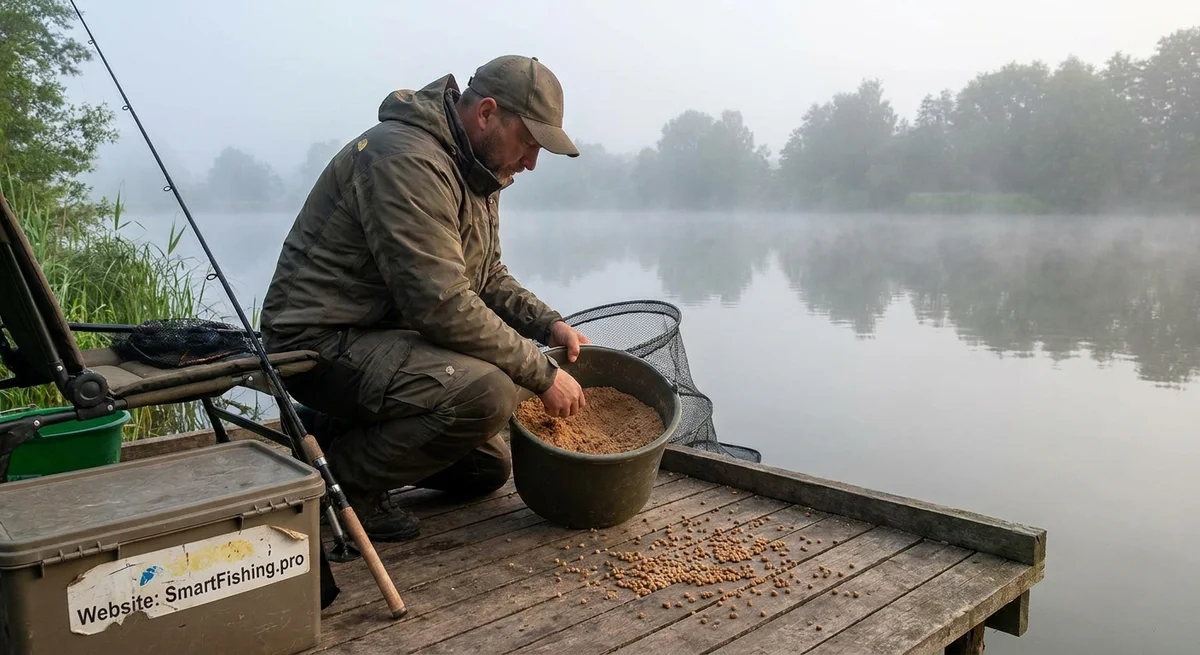
Prebaiting Campaigns for June Tench: Frequency, Quantity, and ROI
Introduction
In June, tench in warm water often feed heavily after spawning. Prebaiting – the practice of placing bait in a swim before you fish – can draw those tench in and make them feed confidently. By baiting ahead of time, you “train” fish to visit your spot and be ready to take hookbaits (www.anglersnet.co.uk). In fact, anglers report that prebaiting regularly can “put more fish on the bank” by making them less wary of bait (www.anglingtimes.co.uk) (www.anglersnet.co.uk). To design a productive June tench prebait campaign, consider key factors like how many fish are around (density), how much waterfowl competition there is, and the water temperature. Below we compare frequent small binges of bait (“little and often”) versus single heavy dump, explain how baiting conditions the swim, and suggest ways to track fish at the baited spot. We also sketch out sample schedules with estimated costs and simple rules for when to keep going – or call it quits.
Key Factors: Fish Density, Birds, and Water Temperature
- Fish density: A lake with many tench means each fish needs less bait to find your spot. With few tench, you may need a stronger bait pulse to get their attention. In low-density waters, heavier baiting (or longer prebaiting) can lure scarce fish, while in crowded waters small amounts can keep many fish fed. Adjust bait amounts so the ration per fish is sensible.
- Bird competition: Ducks, coots and swans will eat free bait. Swans tend to stay in water over about 4 ft deep, but ducks and coots can feed at almost any depth (www.anglingtimes.co.uk). To combat them, use small, dense baits (like pellets or groundbait) that sink fast. They’re harder for dabbling birds to pick up (www.anglingtimes.co.uk). Interestingly, the presence of feeding birds can also spur fish to eat more quickly. Dutch anglers note that waterfowl actually trigger tench to crush bait, as fish realize “now-or-never” when birds compete (www.sportvisserijnederland.nl). In short, birds may reduce your bait but they usually do not ruin a swim – if anything, their feeding can make shy fish bite faster (www.sportvisserijnederland.nl) (www.anglingtimes.co.uk).
- Water temperature: In June the water usually warms into the high teens (°C). Tench spawn around 19–20 °C (www.fishbase.org) and afterward feed aggressively to rebuild energy. Warm water (up to ~20–25 °C in summer) boosts fish metabolism and appetite. This means June tench can be quite eager to eat, but also that bait can be eaten and digested quickly. Plan prebaiting at times of day when tench naturally feed (often early morning or late evening), and be ready for active feeding. Cooler spring temperatures might require heavier-feeding cues, while very hot midsummer water (>24 °C) might make fish cranky or lie down, so adjust bait type (e.g. more floating or protein-packed bait in cooler water versus small, frequent doses if very warm).
Prebaiting Strategies: Little-and-Often vs Heavy One-Off
Two contrasting approaches can be used:
-
Little-and-Often: This method spots-baits small amounts very regularly (for example, a few times a week or even daily with modest portions). Its goal is to habituate the fish to that location. Angling advice is clear: “baiting up with less bait regularly, say every two or three days, is more beneficial than a large hit every now and then,” since it lets fish eat quietly without spooking them (www.anglingtimes.co.uk). By feeding 200–500 g of mixed bait multiple times, the fish come to recognize the spot as a safe feeding zone. An experienced carp angler advises tossing about 1 pound of bait (≈0.45 kg) three times in the week before fishing, so “the fish will… feed more confidently” when you arrive (www.anglersnet.co.uk). Over 1–2 weeks this slowly conditions the fish – they clear the bait each visit and learn to return for more.
-
Heavy One-Off: A large quantity of bait is thrown in at once (for example, several kg at the start). This can instantly attract fish, especially if they are hungry, but it carries risks. If too much bait is dumped, the fish may gorge and then scatter, or even stop feeding temporarily. Also, bystanders (other anglers or birds) may notice a big bait slick. Some anglers report that heavy baiting (especially with highly attractive baits like hemp seed) can have a lagged effect: fish may not appear in force until a day or two later. For example, dumping half a bucket of hemp in one go gave only a couple of bites at first, but over the next week the fish returned and produced many good catches (www.anglersnet.co.uk). The downside is that until that delayed feeding happens, your rods stay quiet.
Swim Conditioning: Regardless of method, the aim is to condition the swim. Essentially, prebaiting trains tench to associate your spot with food. As one guide explains, the goal is that fish will eat steadily and confidently in that spot so they’ll take your hookbait (www.anglersnet.co.uk). Frequent small feeds usually condition this strongest: the fish get used to surface/bottom meals and lose their wariness. In a sense you are “teaching” the fish that this spot is safe. When they come back regularly, they often clear natural sediments or lost bait, leaving a bare patch – an obvious sign your prebait worked. Then, fishing the same spot is easier: the tench see your hookbait mixed with familiar feed and strike boldly (www.anglersnet.co.uk) (www.anglersnet.co.uk).
Tracking Fish Visits
To know if your prebaiting is working, consider setting up monitoring:
-
Trail Cameras: A simple (game) camera pointed at the bait pile can record what visits during day/night. Water birds, otters, or even curious carp often appear. Some anglers clip a trail cam to their brolly or pegs, or loop it on a branch over the swim. This lets you see if fish have been taking your bait. Cameras cost as little as £30–£100 for basic models with night IR. They don’t identify the exact number of tench, but any footage of swirls or bubbles is evidence the spot is holding fish.
-
Underwater Cameras or Fish-Finders: There are specialized tools now. An underwater camera (often tethered to a bankstick or deployed from a bait boat) can show live video of the bottom. This can reveal tench suckling bait. Modern live sonar (forward-facing sonar) is even more advanced: it gives a real-time view of fish moving around a bait cloud. For example, Garmin advertises that its “LiveScope” sonar lets you literally see fish swimming and your bait in real time (www.garmin.com). Though more expensive (several hundred dollars or more), these devices can confirm if tench are showing interest in the prebait – a true ROI “proof”. Even a smartphone fish-finder (like a castable sonar ball) can show fish arches over your bait.
By watching visits, you avoid wasted effort. If after a few bait sessions you see no fish at all (on camera or sonar) then probably your spot or bait choice is wrong – it’s time to move. If you see fish milling, you know continuing is worthwhile.
Sample Prebait Schedules and Costs
Below are example plans (assuming you are on foot or short drive to a local lake). Adjust numbers for your situation:
-
Little-and-Often Plan: Suppose you prebait 5 days out of 10 (every other day) with 0.5 kg of mixed bait each time. Total bait used = 2.5 kg over 10 days. If your bait costs £3–5 per kg, that’s about £7–£12 in bait. You might use boilies plus cheaper groundbait, or pellets. You’d visit the swim 5 times – if each round trip is a few miles in the car, estimate maybe £2–£5 fuel or parking. So total cost ~£12–£17. During this time you might catch a few tench along the way, making the ROI strong. This schedule conditions the swim gradually (fish keep seeing that 0.5 kg and coming back).
-
Heavy One-Off Plan: Dump, say, 3 kg of bait on Day 1 in one session (perhaps a mix of boilies and pellets). Bait cost
£9–£15 (3 kg at £3–5/kg). It’s a bigger up-front cost than 0.5 kg, but only one trip needed (£2 fuel). Total ~£11–£17. After dumping it, you might wait 1–2 days (or even fish that night) to see if the tench show. In the best case, many fish come quickly. In the worst, they may take more time. If after 3–4 days the bait is untouched and fish not seen (camera/sonar confirms nil activity), then that stake might be sitting idle.
In both cases the bait cost is similar, but the effort differs (many short visits vs one big visit). A key rule is to balance cost against results:
- If frequent baiting yields steady bites (and catches) each trip, the small costs add up to a big payoff. You’d likely continue until fish stop showing interest (or you’ve caught enough).
- If the heavy dump quickly attracts fish (say you see fish on echo-sounder or get bites immediately), it may suffice and you can stop baiting further.
- But if heavy baiting does nothing after several days (no fish detected, no bait eaten), it’s more cost and waste – so it’s time to stop and try another spot.
Decision Rules: Continue or Stop?
Use simple checks each day/week:
- Check for bites or signs. When fishing or using cameras/sonar, note if tench are eating the prebait. If you see swirls or get a few small fish, that’s good – keep going. If multiple sessions in a row produce nothing (no fish seen, bait undisturbed), switch strategy or location.
- Time limit. A common rule is: if after about a week of prebaiting there’s no fish action, change spots. Tench usually respond to feed within a few days up to a week if they are in the area (www.anglersnet.co.uk).
- Bird vs fish. If every feed is immediately grabbed by birds (with no fish following), adjust the bait (denser) or check a deeper spot. If birds are eating and you still see fish around, that’s actually good – it means bait is attracting both.
- Cost vs payoff. Keep tabs on how much you spend per fish caught. If, for example, you’ve put 3 kg of bait in and only one small tench has appeared, consider moving. But if a kilo of bait has already brought in 5–10 fish, stay the course.
Ultimately, the decision is practical: are fish responding? If yes, feed them. If no, cut losses. A log or calendar (like one angler uses) can help track when you bait and when fish arrive (www.anglersnet.co.uk).
Conclusion
A data-driven prebaiting plan makes June tench fishing much more productive. Manage your campaign by balancing frequency and quantity of bait: frequent small feeds can carefully train tench to your swim (www.anglingtimes.co.uk) (www.anglersnet.co.uk), while a heavy one-off can grab attention fast but may require patience. Factor in fish density (use more bait if fish are sparse), water temperature (warmer water boosts appetite), and bird competition (use sinking baits or deeper spots) (www.anglingtimes.co.uk) (www.sportvisserijnederland.nl). Use trail cams or sonar to verify fish activity: seeing fish on the bait exactly informs whether to press on. Finally, budget your bait and trips, and set clear rules: for example, move on if no fish appear after a week, but keep baiting if fish are consistently turning up. With these guidelines, your prebait campaign can maximize catches (and ROI) of June tench.
**`
Get New Fishing Research & Podcast Episodes
Subscribe to receive new research updates and podcast episodes about freshwater fishing, lake fishing, fish species, seasonal patterns, fishing tactics, bait, lures, rigs, and practical angling strategy.