Bait Leaching
bait leaching
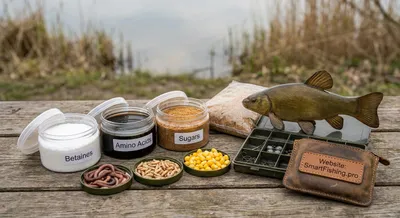
Micronutrients and Attractors: Betaines, Amino Acids, and Sugars for Tench
Carrier Mediums: Attractants must be delivered in a way fish can encounter them. Common carriers include: Pellets or boilies: Mix attractants into...
Bait Leaching
Bait leaching is the process where water washes out soluble substances from bait, creating a small plume of smell and taste in the surrounding water. Those dissolved compounds, like amino acids and other nutrients, spread into the water and act as chemical signals that can draw fish toward the bait. The speed and amount of leaching depend on factors such as bait composition, temperature, water movement, and how finely the bait is broken down. Faster leaching can be useful because it attracts fish quickly, but it can also make the bait break down or lose its attractiveness sooner. Slower leaching helps the bait last longer and stay on the hook, which can improve hook-up rates for cautious or slow-feeding fish. Anglers and bait makers manage leaching by altering bait ingredients, adding binders or coatings, or using harder baits to control how quickly compounds are released. Understanding leaching matters because it affects how far fish can detect your bait, how long the bait remains effective, and the timing of bites. In short, bait leaching is the invisible chemical release that helps fish find bait, and controlling it can make the difference between a successful outing and an empty line.
Get New Fishing Research & Podcast Episodes
Subscribe to receive new research updates and podcast episodes about freshwater fishing, lake fishing, fish species, seasonal patterns, fishing tactics, bait, lures, rigs, and practical angling strategy.