Tench
tench
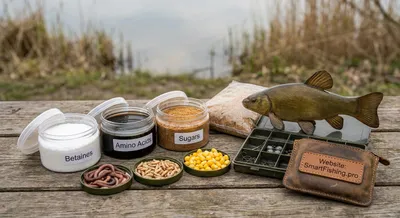
Micronutrients and Attractors: Betaines, Amino Acids, and Sugars for Tench
Carrier Mediums: Attractants must be delivered in a way fish can encounter them. Common carriers include: Pellets or boilies: Mix attractants into...
Tench
The tench is a freshwater fish native to Europe and parts of Asia, recognized by its olive-green color and chunky, compact body. It has small, often hard-to-see scales hidden in a thick, slimy skin layer, a rounded tail, and a blunt head that give it a stout appearance. Tench prefer slow-moving or still waters like lakes, ponds, and sluggish rivers with soft, muddy bottoms and lots of aquatic plants. They are bottom feeders, eating worms, insect larvae, small crustaceans, plant material, and organic detritus found in the sediment. This species tends to be shy and more active at dusk or during the night when it searches for food. Adults commonly measure about 20 to 40 centimeters long, though larger fish are possible and are prized by anglers. In spring and early summer tench spawn among submerged vegetation, laying eggs that stick to plants until they hatch. Ecologically, tench help recycle nutrients in freshwater systems and serve as prey for larger predators, so they play a role in the food web. They are also popular with recreational fishermen and are kept in some ponds and large aquariums because of their hardiness. Overall, the tench is a familiar and useful species in many freshwater habitats, valued for both its ecological role and its place in recreational fishing.
Get New Fishing Research & Podcast Episodes
Subscribe to receive new research updates and podcast episodes about freshwater fishing, lake fishing, fish species, seasonal patterns, fishing tactics, bait, lures, rigs, and practical angling strategy.